 Peptiqora
Identity & purity
What was identified, and what did the analytical method detect?
Choose a vial amount to ask about, or explore the published research and its limitations.
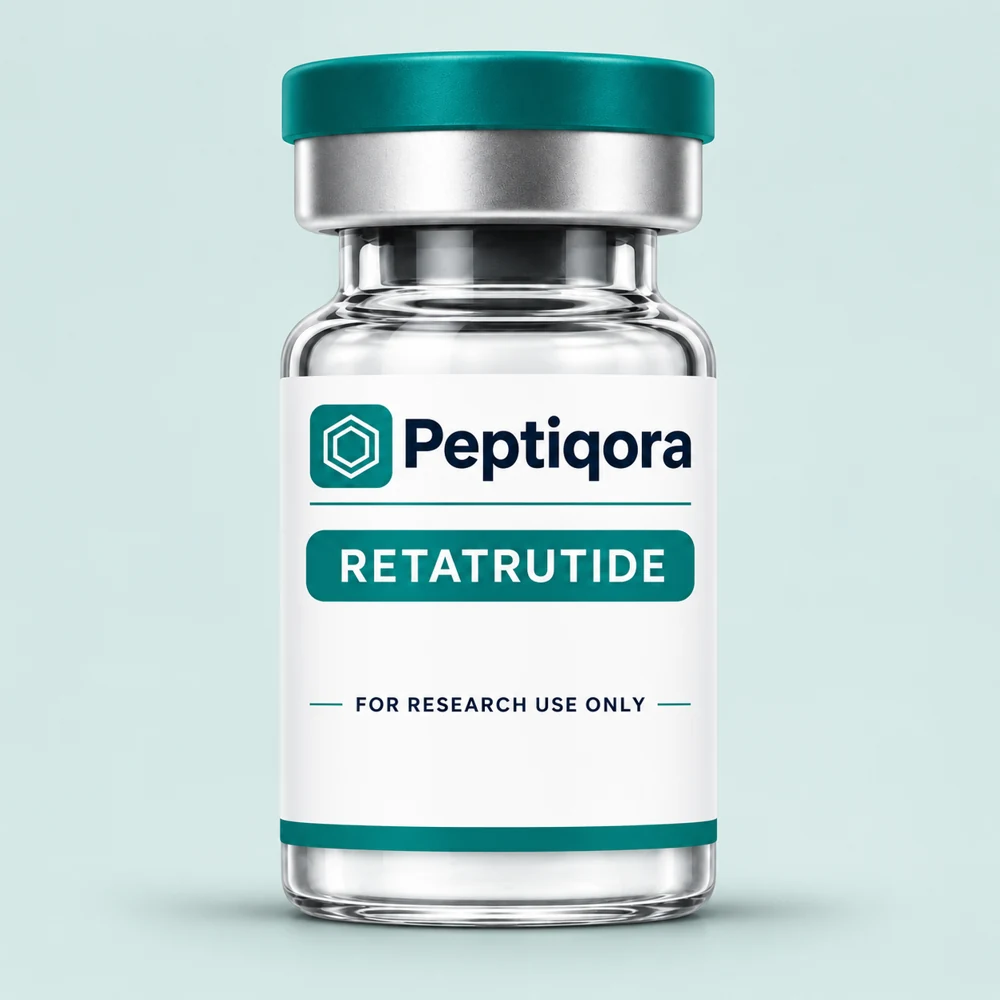
Select an amount per vial and email us for more information.
The amount stated per vial, not a dose or concentration.
Choose an amount, or email a general vial question.
Or email peptiqora@gmail.com
Your email opens as a draft. Add your question, review it and press Send in your email app.
Different tests answer different questions. Match a report to its sample, method and date.
No verified, batch-matched laboratory report is published on this site yet.
Ask about testing documentsWhat was identified, and what did the analytical method detect?
A quantitative assay measures content. A purity percentage alone does not establish milligrams.
These require separate evidence from identity, purity and content testing.
Retatrutide has no authorised indication in the UK. It is also not an ingredient in an FDA-approved medicine in the US. Positive research results are not a marketing authorisation.
MHRA · 15 October 2026 ↗ · UK regulator statement
FDA · Unapproved GLP-1 drugs ↗ · US regulatory status
Retatrutide activates GIP, GLP-1 and glucagon receptors. Receptors are proteins that receive chemical signals. These pathways help regulate blood glucose, appetite and energy balance. “Triple agonist” means a single molecule activates three receptor types.
The development research includes laboratory, animal and early human work. Proposed increases in energy expenditure from glucagon-receptor activation should be understood in that context, rather than described as proven human “fat burning”.
Coskun et al. · Cell Metabolism, 2022 ↗ · Development research: laboratory, animal and early human work
Controlled studies have reported substantial average weight reductions in selected populations. Read the population, comparator and duration alongside each result. The studies below were sponsored by Lilly.
Choose a study to see its participants, results, limitations and original source.
Participants: 338 adults with obesity, or overweight with a weight-related condition
Design: Randomised, double-blind, placebo-controlled; 48 weeks
Average body-weight change ranged from −8.7% to −24.2% across the research groups, versus −2.1% with placebo at 48 weeks. The primary endpoint was at 24 weeks; the 48-week result was secondary.
Keep in mind: Digestive adverse events were common, generally mild or moderate and dose-related. Heart-rate increases peaked around week 24, then declined.
Jastreboff et al. · NEJM, 2023 ↗ · Peer-reviewed randomised human trial
Participants: 2,339 adults with obesity without diabetes
Design: Randomised, double-blind, placebo-controlled; 80 weeks
The treatment-regimen analysis reported average weight changes of −17.6%, −23.7% and −25.0% across groups, versus −3.9% with placebo.
Keep in mind: Digestive adverse events were most common. The frequently quoted 28.3% headline comes from a different analysis; it should not be substituted for these results.
Jastreboff et al. · NEJM, 2026 ↗ · Peer-reviewed phase 3 human trial; abstract reviewed
Participants: 1,152 adults with BMI ≥27 and type 2 diabetes
Design: Randomised, double-blind, placebo-controlled; 80 weeks
Average weight changes in the treatment-regimen analysis were −11.9%, −16.8% and −18.8% across groups, versus −5.1% with placebo.
Keep in mind: Digestive events, low blood pressure and altered or unpleasant skin sensation occurred more often with retatrutide. Findings should not be transferred to people without diabetes.
Bellido et al. · The Lancet, 2026 ↗ · Peer-reviewed phase 3 human trial; abstract reviewed
Participants: 537 adults with type 2 diabetes inadequately controlled by diet and exercise
Design: Randomised, double-blind, placebo-controlled; 40 weeks
HbA1c, a measure of longer-term blood glucose, fell by 1.69–1.94 percentage points versus 0.81 with placebo. Mean weight reductions were 11.5–15.3% versus 2.6%.
Keep in mind: Digestive effects predominated. Adverse-event discontinuation was 2–5% across retatrutide groups versus 0% with placebo; no severe hypoglycaemia was reported.
Bajaj et al. · The Lancet, 2026 ↗ · Peer-reviewed phase 3 human trial; abstract reviewed
Participants: 445 and 574 adults in two trials, with BMI ≥27, painful knee osteoarthritis and no diabetes
Design: TRIUMPH-4 and the TRIUMPH-1 osteoarthritis study; placebo-controlled
At 68 weeks in TRIUMPH-4, weight changes were −20.0% and −23.7% versus −4.6%. Knee pain improved more than with placebo.
Keep in mind: Serious adverse events were more common with retatrutide in both trials. Improved pain is not evidence of cartilage regeneration or joint healing. This summary is based on the newly published abstract.
Schnitzer et al. · NEJM, 8 November 2026 ↗ · Peer-reviewed human trials; journal abstract reviewed
A treatment-regimen analysis estimates outcomes under an assigned treatment strategy, including the effects of treatment discontinuation or other specified events. A hypothetical efficacy analysis asks what might happen under different assumptions, such as remaining on treatment. These answer different questions.
For TRIUMPH-1, this guide uses the published treatment-regimen results rather than the larger company headline. Neither is a prediction of your personal result.
Jastreboff et al. · NEJM, 2026 ↗ · Peer-reviewed phase 3 human trial; abstract reviewed
Lilly announced results on 28 October 2026 from an 80-week, open-label study involving 1,298 adults with type 2 diabetes, comparing retatrutide with semaglutide. Detailed results were still intended for later presentation and publication. This guide treats the announcement as provisional sponsor reporting.
Lilly · TRANSCEND-T2D-2, 28 October 2026 ↗ · Company topline announcement, not a peer-reviewed report
TRIUMPH-5 compares retatrutide with tirzepatide. TRIUMPH-Outcomes is investigating cardiovascular and kidney outcomes. A registered study describes planned research; it does not establish superiority or fewer heart attacks or kidney failures.
TRIUMPH-5 · NCT06662383 ↗ · Trial registry: design and status, not proof of results
TRIUMPH-Outcomes · sponsor trial record ↗ · Ongoing cardiovascular and kidney outcomes study
Digestive adverse effects are common in the trials. Heart-rate changes, low blood pressure and altered skin sensation have also been reported. The osteoarthritis trials reported more serious adverse events with retatrutide. The overall balance of benefit and harm depends on the population and outcome studied.
Jastreboff et al. · NEJM, 2023 ↗ · Peer-reviewed randomised human trial
Bellido et al. · The Lancet, 2026 ↗ · Peer-reviewed phase 3 human trial; abstract reviewed
Schnitzer et al. · NEJM, 8 November 2026 ↗ · Peer-reviewed human trials; journal abstract reviewed
Rare harms, longer-term outcomes and durability after stopping remain important questions. These findings should not be extrapolated to children, pregnancy, healthy-weight people or performance enhancement.
A controlled trial does not establish the identity, amount, purity, sterility or safety of an independently sourced vial. The product and monitoring in a trial cannot be assumed to match products offered elsewhere.
MHRA · 24 July 2026 ↗ · UK regulator guidance
This guide was reviewed on 10 November 2026. Some summaries use accessible journal or PubMed abstracts; this is not a full independent systematic review. Linked registries and sponsor records are labelled separately from peer-reviewed papers.